
Two Sterlingers took on tech weeks in two states: Tiffany Schaar spent Hawaii Tech Week in Honolulu attending, speaking, and hosting; and Michelle Denny planned her fall around SF Tech Week followed directly by Sacramento’s. This post weaves their stories together.
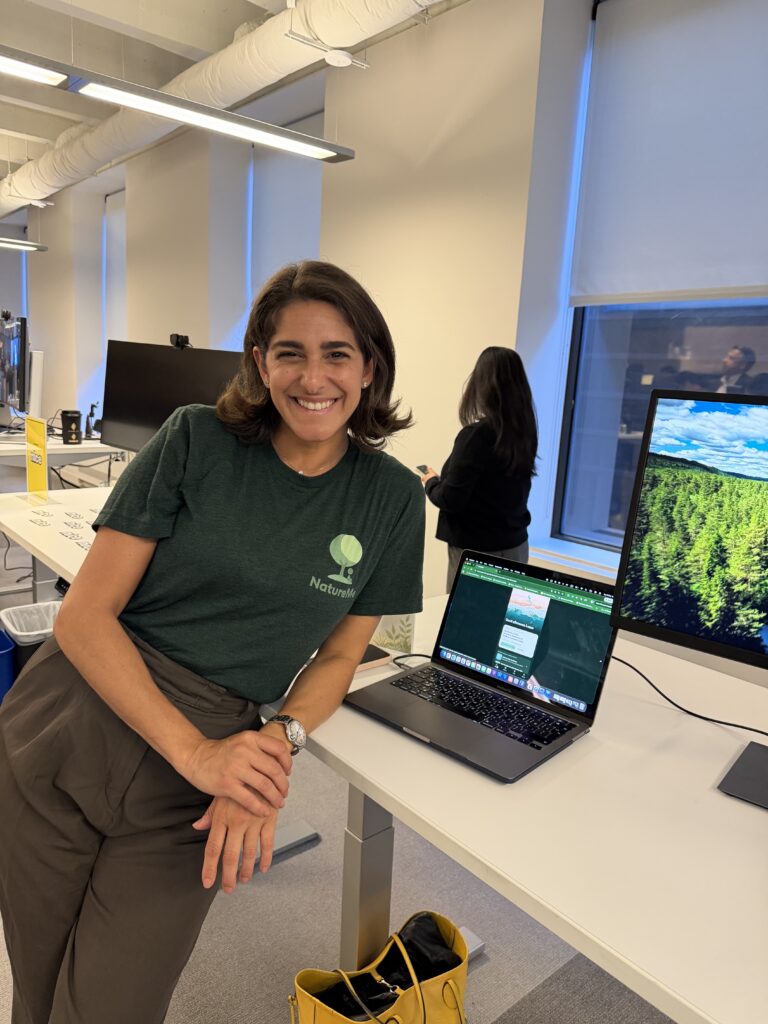
NatureMe founder Lama Masri at the Blue Startups Showcase & ʻOhana Mixer during SF Tech Week.
During Hawaii Tech Week in September, Tiffany sat in on a fireside chat at the Inspiration Hawaiʻi Museum, where Ovetta Sampson, who led machine learning UX at Google and responsible AI design at Capital One, talked about building AI around the people who use it. Gidens, a Hawaiʻi-founded workflow software company for small businesses, hosted the conversation as one of the week’s independently run events.
A few weeks later, Michelle found a little Hawaiʻi amid SF Tech Week’s lineup of events from Google DeepMind, Anthropic, and Stripe. At the Blue Startups Showcase & ʻOhana Mixer, she met NatureMe founder Lama Masri, whose company helps people connect with nature through mindful observation. Founders set up stations for guests to explore their businesses over Hawaiian pūpū and drinks, giving the Honolulu-based accelerator’s cohort a place alongside some of tech’s biggest names.
Tech weeks work this way by design. Organizers set the dates and the brand, and companies, nonprofits, and community groups fill the calendar with their own events. Hawaii Tech Week 2026 ran more than 50 independently hosted events across Honolulu, and California runs several tech weeks, including SF Tech Week, LA Tech Week, and Sacramento Tech Week. For smaller tech companies, these events offer something flagship conferences rarely do: a way in at whatever level of commitment fits the budget. You can attend, speak, or host — and nothing stops you from doing all three in the same week, as Tiffany did in Honolulu.
Tech weeks give smaller companies a stage they don’t have to build themselves
Creating a user conference takes a budget, a venue contract, and months of planning most small companies can’t spare. Ahrefs, the SEO software company, has said a single one of its conferences can cost up to $950,000 to produce. Flagship industry conferences are easier to join, but registration, airfare, and hotels add up quickly, and the agenda is set long before you arrive. Inflation doesn’t help: The Global Business Travel Association projects business travel spending will rise 7.2% this year while the number of trips grows just 1.3%.
Tech weeks change that math, especially when one runs in your own city or a short drive away. Many events are free or low-cost, and attendees build their own schedules from dozens of independently hosted sessions.
The speakers are different, too. Instead of a celebrity keynote, you hear from founders, investors, engineers, and communications leaders who are still close to the work — and the smaller formats make it easier to ask questions and spark real conversations. You also meet companies too early for a booth on a major show floor, and you meet them on home turf, where founders talk openly about the problems their region is trying to solve.
SF Tech Week put AI developers, robotics companies, and marketing leaders on the same calendar, with programs ranging from a Google DeepMind panel to a hardware gathering at a Tesla showroom. Compared with DTECH or HLTH, where a major industry comes together around a central conference floor, SF offers smaller rooms and more-specific reasons to connect, spread across the city.
Show up as an attendee and treat the tracks like market research
Most tech weeks run several tracks at once. Hawaii Tech Week offered events targeting educators, founders and investors, and workforce development, along with industry-specific tracks such as space tech and ocean tech. AI came up in nearly all of them, which made the differences in how people applied the technology all the more interesting
One thread Tiffany followed was how tech opportunities are growing in Hawaiʻi as companies add higher-paid technical roles in a state better known for tourism. A “Companies on the Rise” event made the clearest case, opening with a Closing the Gap panel where leaders from First Hawaiian Bank, Intech Hawaii, Windward Community College, and Smart Yields covered everything from building skills to landing the right role at the right time.
Real value comes from noticing what repeats across tech week sessions you’d never think to group together. Throughout Hawaii Tech Week 2026, speakers in very different sessions kept returning to human judgment and in-person connection without any prompting. One week of sessions isn’t a scientific sample, but a theme that surfaces across unrelated audiences is a strong signal of what’s drawing interest and where your market is heading.
Following those threads takes more planning in a large tech week. San Francisco’s calendar offered hundreds of overlapping events across the city, making a few clear priorities more useful than a packed itinerary. Sacramento’s smaller lineup of just over 40 planned events was easier to map, with practical AI, small-business growth, and civic technology among its recurring themes. In either city, it helps to stay flexible: An event Michelle registered for in Sacramento was unexpectedly canceled, while some SF waitlist approvals arrived after the events had started.
Tips for first-time attendees
- Register early, and if you’re waitlisted for something you really want to attend, show up anyway. Free events fill fast, hosts sometimes cancel when registration runs too low, and waitlists often clear at the door.
- Pick one or two threads to follow instead of sampling everything, then add one event outside your industry for perspective.
- Include at least one small-format event, such as a mixer or roundtable, where conversation is the point.
- Prepare a short, specific answer to “What are you working on?” since you’ll be asked at every event.
- Follow up the same week, while people still remember the conversation
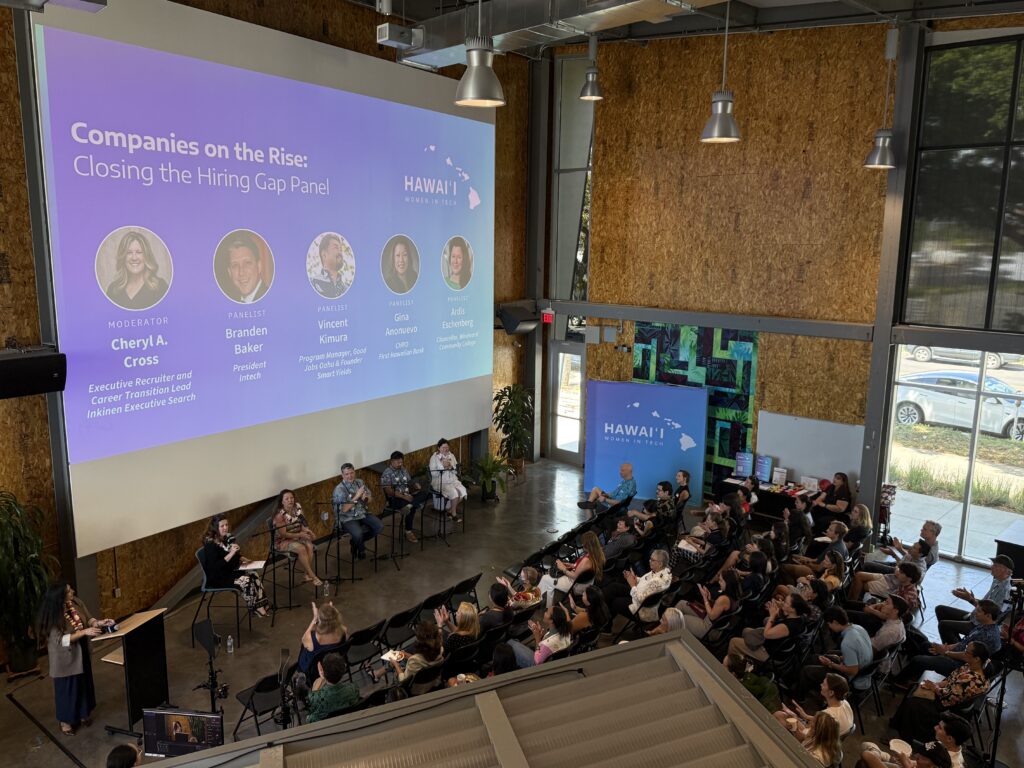
The Closing the Hiring Gap panel opened Companies on the Rise, one of three Hawaiʻi Women in Tech events at Entrepreneurs Sandbox.
Small stages are where you get good at talking about your work
Because hosts fill their own events, tech weeks create far more speaking slots than a single conference agenda can hold. Hosts need panelists, moderators, and fireside guests — and while many come through personal networks, that isn’t the only route to a stage. The planning teams Tiffany worked with this year relied on cold outreach to companies and potential panelists as much as on people they already knew. A company that shows up with a clear point of view and a willing speaker has a real shot. For a founder or subject matter expert who hasn’t spoken much publicly, a panel of 30 people is a far better place to practice than a keynote stage.
Tiffany’s own tech week experience this year showed how much those small stages can produce. She co-hosted a Marketers in Hawaiʻi panel with a friend at Entrepreneurs Sandbox that drew roughly 35 local marketers, and moderated a conversation with four practitioners from banking, HR services, an agency, and a small marketing firm. She also moderated Hawai‘i Women in Tech’s Company Story Stage event, where employees from six local organizations shared how they got into tech, from engineering at Oceanit and tech sales at Microsoft to data governance at the City and County of Honolulu (the recording is now on YouTube). A single tech week appearance can produce weeks of valuable business content, from a recap blog post to LinkedIn updates and video clips, and companies often overlook that benefit when they weigh whether to speak.
Hosting costs a room and a few hours, not a conference budget
Hosting is where tech weeks most outperform other event options for smaller companies. A tech week supplies the audience and the promotion, so a host’s job shrinks to picking a format, booking a space, and covering light food and drinks. In Honolulu this year, that ran anywhere from $500 to a couple thousand dollars depending on size and venue. The Marketers in Hawaiʻi panel above broke even on a $10 ticket.
Bigger is possible on the same model. Hawaiʻi Women in Tech, a nonprofit professional network where Tiffany serves on the board, ran three back-to-back events at Entrepreneurs Sandbox on Sept. 1: Companies on the Rise, a Women in Tech panel, and a pau hana. Tiffany helped plan and run all three. Two drew more than 100 people and the third about 80, with partners and sponsors making the day possible. Stacking the events let attendees come for one or stay for all; the panel drew a full house and a waitlist, and the pau hana ended in a dance party nobody saw coming — which makes a decent case for keeping at least one event on your schedule loose.
The formats range widely, and the best choice depends on whether you want reach or depth:
- Panel discussion at a coworking space: Good reach for modest cost, and easy to fill with partners or customers as panelists
- Fireside chat at a venue with character: A museum, gallery, or studio can become part of the draw
- Interactive workshop or mixer: Dan Kim of IDEO ran a Futuring Mixer with UXHI where attendees physically moved around the space to react to trend cards
- Private dinner or small happy hour: The most intimate option for prospects, customers, or investors you want real time with. Angel Launch’s SaaS and AI networking dinner in San Francisco was simply food, drinks, and conversation among founders and investors, with no formal agenda.
Partners make hosting easier, too. HWIT’s day came together with nine sponsors and partners, and nothing about that model is limited to nonprofits. Two companies can split a venue and a guest list just as easily. Bringing customers, partners, or community groups onto your agenda spreads the cost and widens the audience, and attendees get more than a sales pitch.
Whatever the format, hosts need to keep guests informed. In Sacramento, an event Michelle had arranged travel for was canceled without explanation. Tell registered guests when plans change. Release waitlist spots as they open. And if your event requires approval, decide quickly rather than leaving people hanging.
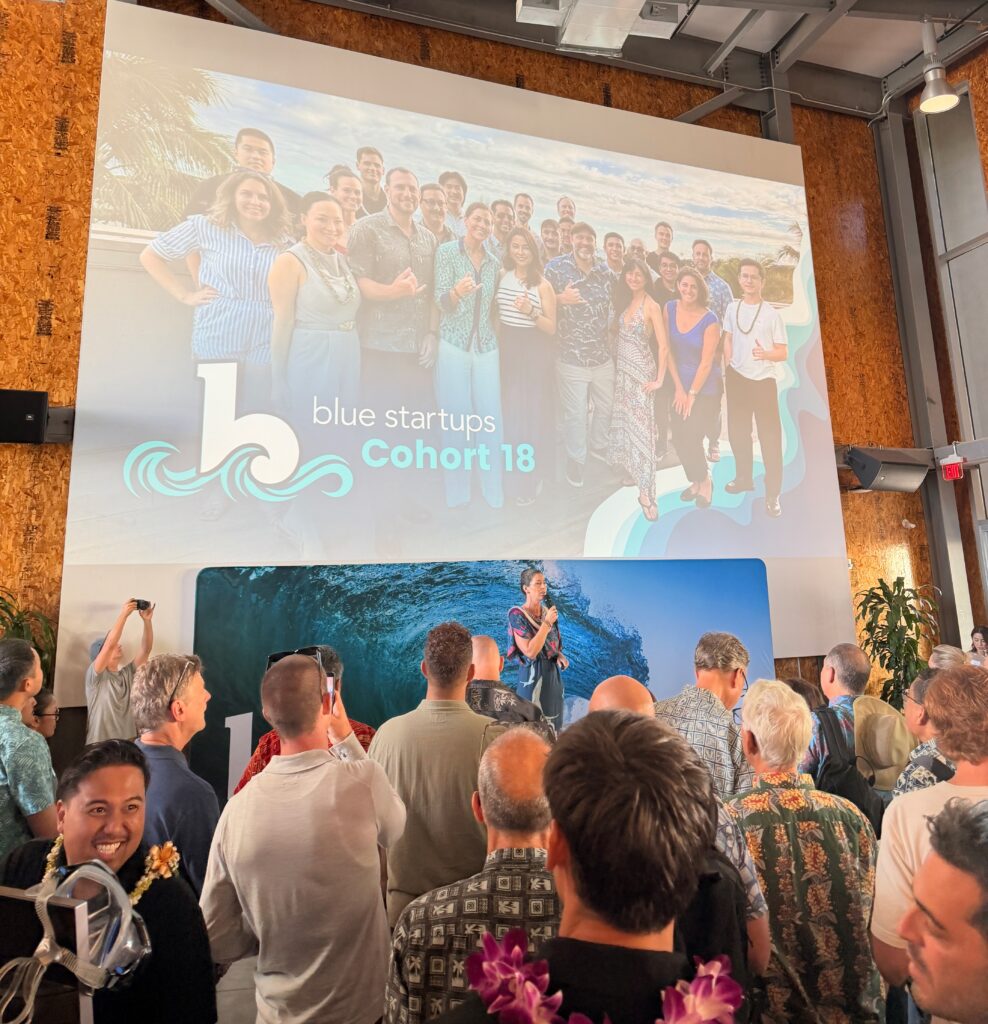
Blue Startups introduces Cohort 18 at its Demo Day during Hawaii Tech Week in Honolulu.
One accelerator, two tech weeks
Tech weeks also connect regions in ways that help founders directly. Blue Startups, the Honolulu-based accelerator, held its Cohort 18 Demo Day in Honolulu during Hawaiʻi Tech Week, then brought the cohort to San Francisco during SF Tech Week for the Showcase & ʻOhana Mixer co-hosted with ThriveHI. For the founders, it was a chance to build on the relationships formed through Blue Startups and meet potential investors and customers in the Bay Area, with the accelerator and ThriveHI helping make introductions.
Show up somewhere new
The biggest advantage of tech weeks may be how easy they make it to appear in a new region. A Sacramento company can host a happy hour during SF Tech Week, and a Bay Area startup can join a panel in LA without the cost of a booth or the commitment of an annual sponsorship. In California, between the city tech weeks and the climate weeks, a company could plan several regional appearances a year.
The appetite is there. Tech Week organizers report that more than 100,000 people attended 2025 events across Boston, New York, San Francisco, and Los Angeles; and Freeman’s spring 2026 Trends Report found that 70% of attendees rank live events as their primary source of professional learning, ahead of every digital channel. People want reasons to leave their desks and meet the people building things near them, and tech weeks hand smaller companies a ready-made way to be one of those reasons.